Posts

Showing posts with the label Italy

Italian Supreme Court says that the quotation exception in copyright law only applies to partial reproductions of works, never to works in their entirety
Image
Kat- quotation There is little doubt that one of the most (if not the most) significant exceptions in copyright law is the one relating to quotation, criticism or review. Despite it being admittedly a ‘right to quote’ from the perspective of Article 10(1) of the  Berne Convention , under EU law quotation is one of the  traditionally  optional exceptions found inter alia in Article 5 of the  InfoSoc Directive , specifically Article 5(3)(d). This is a provision which, according to the CJEU ( Painer ), has the same material scope of its Berne counterpart. While  not all Member States  took advantage of the possibility under Article 5(3)(d) of the InfoSoc Directive, with the transposition of Article 17 of the  DSM Directive  into national laws, all Member States shall be required to introduce exceptions allowing quotation, criticism and review, at least insofar as Article 17-related activities are concerned. All this is testimony to the importance of ...
How do you protect an iconic handbag? Milan court considers IP rights vesting in Longchamp’s Le Pliage

Image
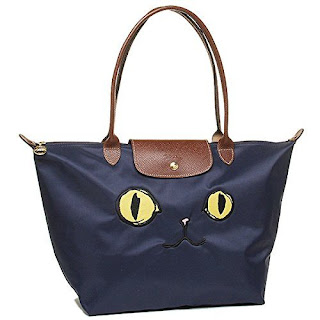
The IPKat's favourite  Le Pliage When you have a handbag design bestseller with over 54 million copies sold around the world since its creation in 1993, the question concerning the IP rights vesting in it is not just an academic one. All this was at the centre of a recent decision of the Milan Court of First Instance ( decision 10280/2021 ). The case concerned Longchamp’s  Le Pliage  “cult” bag . The Milan court accepted to enforce Longchamp’s 3D EU trade marks (EUTMs) protecting the shape of  Le Pliage , but  refused  to acknowledge that copyright protection could also vest in such a design. Background In 2019, Longchamp initiated proceedings for trade mark and copyright infringement, as well as unfair competition, against a company making and selling a bag design closely resembling that of  Le Pliage , specifically  Le Pliage 1623 Nylon . The characterizing elements of  Le Pliage , according to Longchamp, would be the original combination o...

Italy has transposed the DSM Directive

Image
Merpel celebrated Halloween in Florence Together with Spain   [Katpost  here ] , this week it has been Italy’s turn to transpose the   DSM Directive   into its own law. Next week, the   Legislative Decree   approved by the Council of Ministers will be published on the Italian Official Journal ( Gazzetta Ufficiale ). During the summer, The IPKat  discussed  the content of some of the most ‘interesting’ draft provisions that Italy was considering adopting to implement the Directive into its own law. The final text of the Italian Legislative Decree does not substantially depart from that draft legislation. Let’s take a closer look at of some of the provisions – online content sharing service providers (OCSSPs), text and data mining (TDM), press publishers’ right – eventually adopted and see what mark the new Italian provisions may deserve from the perspective of compliance with their EU counterparts – respectively: Articles 17, 3-4, and 15 of the Dir...

Towards the national transpositions of the DSM Directive: various techniques to ... do as you please

Image
Beach + sunbathing + copyright = the perfect summer As readers with an interest in EU copyright are well aware, EU Member States had time until 7 June to  transpose the   DSM Directive 2019/790   [Katposts  here ]   into their own national laws. With a few exceptions  [see Communia tracker  here ] , because of a number of reasons - ranging from COVID to the delayed  Article 17 Commission's guidance   [Katpost  here ]  to some important pending rulings of the Court of Justice of the European Union (CJEU), the majority of EU Member States missed this deadline. This said, based on what is already available, it is apparent that the provisions that the EU legislature adopted in 2019 to establish a ‘Digital Single Market’ will be implemented in different – if not altogether creative – ways across the EU. It is true that there are provisions in the Directive that leave Member States significant discretion. Such discretion ranges from the v...

Italian Supreme Court rules that technical regulation (drafted by an IP lawyer) may be *in principle* protected by copyright

Image
Lively drafting session ... Is an anticounterfeiting service regulation drafted by an IP lawyer protected by copyright? This, in a nutshell, is the question at the heart of the dispute initially brought by said IP lawyer against the organizers of a trade fair in the Venice area, who had allegedly copied the regulation that he had drafted. Last month, the Italian Supreme Court  ruled   (decision 10300/2020,  Casucci v Unipol Assicurazioni S.p.A. and Others , also commented in Italian  here ) that, in principle, a technical work like that one at hand could be eligible for copyright protection, subject to it being original. Background At first instance, the IP lawyer prevailed over the defendants.  However, in 2016, the Venice Court of Appeal ruled in favour of the defendants/appellants, holding that it was not apparent where the originality – and, thus, protectability - of said regulation would lie, since the regulation at hand was found to...

Maradona successfully sues Dolce&Gabbana over unauthorized use of his name on a jersey

Image
Readers might remember that, a couple of years ago, this blog  reported  on a lawsuit filed in Italy by former Argentinean footballer  Diego Armando Maradona  against Italian fashion house  Dolce&Gabbana .  The reason?  The use, by the defendants, of his name on a jersey (below) worn by a model during a fashion show held in Naples in 2009  [Maradona  played for Napoli  for a few years, and in that city he reached the peak of his career] . The jersey, which was sold neither before nor after the show, carried the number ‘10’, ie the same number used by Maradona while at Napoli, and had the same colour combination as Napoli jerseys. Images of the jersey appeared on general interest media and also on the Dolce&Gabbana website.  Maradona sued and claimed damages for EUR 1 million (!) due to the unauthorized commercial exploitation of his name. He submitted that Dolce&Gabbana’s use of his name had allowed the...

Italian Supreme Court confirms approach to damage determination in image rights cases

Image
Mirror, mirror on the wall, who's the fairest of them all? When it comes to the violation of one's own image rights, what damages can be awarded? Is it just the damage due to the moral prejudice caused or also damages for the economic prejudice suffered by the person whose rights have been violated? Does the fact that the claimant ruled out any possibility for third parties to use their image influence at all the identification of what damages are due, eg because there is no actual market for the licensing of the claimant's image? These are all issues that the Italian Supreme Court recently considered in a case ( sentenza 1875/19 ) concerning the violation of a well-known actor's image rights. Unsurprisingly, the court confirmed its earlier approach that, when it comes to image rights violations, the damage that can be compensated is both of a moral and economic nature. Let's see how the court reasoned. Background The Milan Cour...

Milan court issues dynamic blocking injunction against Italian ISPs

Image
Does a blocking injunction against an intermediary only concern the domain names indicated in the relevant order or can it be also considered as encompassing future infringements committed through other domain names? This is the question that the Milan Court of First Instance (Tribunale di Milano) had to address in the context of interim proceedings between publisher Mondadori and a number of major Italian internet access providers (ISPs). It provided an interesting response in two twin decisions  [available  here ]  issued last June and which the IPKat has learned about thanks to Katfriend  Valentina Borgese . Background In 2017 publisher Mondadori requested the Milan Court of First Instance to issue an interim injunction against a number of major Italian internet access providers (ISPs) consisting of an order to adopt the most appropriate measures to block access to a platform and all the different domain names ( alias ) under which it o...