Posts

Showing posts with the label copyright

What does the CJEU judgment in the Polish challenge to Article 17 (C-401/19) mean for the transposition and application of that provision?
Image
  On 26 April 2022, the Court of Justice of the European Union (CJEU) delivered its long-awaited judgment in   Poland v European Parliament and Council  (C-401/19) . The Court held Article 17 of the   DSM Directive   compatible with freedom of expression and information under Article 11 of the   EU Charter of Fundamental Rights . In so doing, it rejected the request of the Republic of Poland to annul said provision. The Court also noted how currently no valid alternatives appear to exist to the use of automatic recognition and filtering tools in order to comply with the obligations under Article 17(4)(b)-(c) (para 54). The judgment considers that the liability regime established under Article 17(4) represents a restriction on freedom of expression/information (para 58). Nevertheless such a restriction is not undue. Internal safeguards are provided, of which six key ones are identified (see paras 85-98). Member States are required to consider such safeguards...

CJEU rules that private copying also applies in the cloud and warns against thinking that everything is communication to the public

Image
  A few days ago the Court of Justice of the European Union (CJEU) rendered its   judgment in C-433/20  Austro-Mechana , ruling that the notion of reproduction ‘on any medium’ extends to the cloud and, therefore, that private copying under Article 5(2)(b) of the   InfoSoc Directive   also applies in that context. Kat cloud ... The judgment is in line with last year’s  Opinion  of Advocate General (AG) Hogan  [ here ]  and clarifies the treatment of private copying in the context of cloud computing, this being something that had been previously asked to the Court (in the context of the  VCAST  referral:  here ), but which the CJEU did not expressly address, preferring instead to focus on the qualification of providers of cloud-based storage facilities that give access to protected content to users based in territories for which no licence is in place. Background This referral from Austria was made in the context of litigation be...

Italian Supreme Court says that the quotation exception in copyright law only applies to partial reproductions of works, never to works in their entirety

Image
Kat- quotation There is little doubt that one of the most (if not the most) significant exceptions in copyright law is the one relating to quotation, criticism or review. Despite it being admittedly a ‘right to quote’ from the perspective of Article 10(1) of the  Berne Convention , under EU law quotation is one of the  traditionally  optional exceptions found inter alia in Article 5 of the  InfoSoc Directive , specifically Article 5(3)(d). This is a provision which, according to the CJEU ( Painer ), has the same material scope of its Berne counterpart. While  not all Member States  took advantage of the possibility under Article 5(3)(d) of the InfoSoc Directive, with the transposition of Article 17 of the  DSM Directive  into national laws, all Member States shall be required to introduce exceptions allowing quotation, criticism and review, at least insofar as Article 17-related activities are concerned. All this is testimony to the importance of ...

How do you protect an iconic handbag? Milan court considers IP rights vesting in Longchamp’s Le Pliage

Image
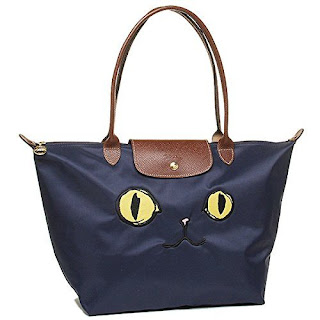
The IPKat's favourite  Le Pliage When you have a handbag design bestseller with over 54 million copies sold around the world since its creation in 1993, the question concerning the IP rights vesting in it is not just an academic one. All this was at the centre of a recent decision of the Milan Court of First Instance ( decision 10280/2021 ). The case concerned Longchamp’s  Le Pliage  “cult” bag . The Milan court accepted to enforce Longchamp’s 3D EU trade marks (EUTMs) protecting the shape of  Le Pliage , but  refused  to acknowledge that copyright protection could also vest in such a design. Background In 2019, Longchamp initiated proceedings for trade mark and copyright infringement, as well as unfair competition, against a company making and selling a bag design closely resembling that of  Le Pliage , specifically  Le Pliage 1623 Nylon . The characterizing elements of  Le Pliage , according to Longchamp, would be the original combination o...

US Copyright Office refuses to register AI-generated work, finding that "human authorship is a prerequisite to copyright protection"

Image
Can a work entirely created by a machine be protected by copyright? On Valentine’s Day, the US Copyright Office (Review Board)  answered  this question with a heartbreaking ‘no’, holding that “copyright law only protects “the fruits of intellectual labor” that “are founded in the creative powers of the [human] mind”” and consequently refusing to register the two-dimensional artwork 'A Recent Entrance to Paradise' below (the ‘Work’): Creativity Machine's A Recent Entrance to Paradise Background In 2018, Stephen Thaler (if the name rings an  AI inventor-bell  then you’re hearing it right) applied to register a copyright claim in the Work, indicating “Creativity Machine” as the author and Thaler as the owner of such machine. The application stated that the Work had been autonomously created by a computer algorithm running on a machine. Registration was sought as a work-for-hire to the owner of the Creativity Machine. In 2019, the Copyright Office rejected the applicatio...

UKIPO unveils report highlighting influence of social media influencers (also) on the purchase of counterfeits

Image
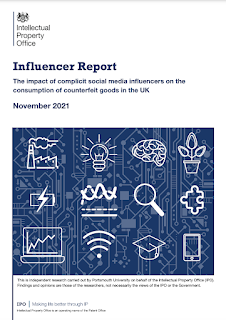
  Last week, the UK Intellectual Property Office (UKIPO) released an intriguing   report  measuring and analyzing (apparently for the first time) the influence that social media influencers exert on consumers   also   when it comes to purchasing counterfeits. This kind of research is timely, also considering – among other things – recent initiatives in which brand owners and Amazon joined forces to bring judicial proceedings –  now settled out of court  – in the USA against influencers over the advertising, promotion and facilitation of sale of counterfeits on the latter’s platform through the influencers’ own accounts on Instagram, Facebook, and TikTok, as well as their own websites. The findings The UKIPO’s findings are based on a quantitative survey of 1,000 female (studies suggest that influencer marketing is “ highly gendered ”) consumers in the UK, aged 16 to 60 and who use social media at least once per week. In addition, the notion of ‘counterf...

Italy has transposed the DSM Directive

Image
Merpel celebrated Halloween in Florence Together with Spain   [Katpost  here ] , this week it has been Italy’s turn to transpose the   DSM Directive   into its own law. Next week, the   Legislative Decree   approved by the Council of Ministers will be published on the Italian Official Journal ( Gazzetta Ufficiale ). During the summer, The IPKat  discussed  the content of some of the most ‘interesting’ draft provisions that Italy was considering adopting to implement the Directive into its own law. The final text of the Italian Legislative Decree does not substantially depart from that draft legislation. Let’s take a closer look at of some of the provisions – online content sharing service providers (OCSSPs), text and data mining (TDM), press publishers’ right – eventually adopted and see what mark the new Italian provisions may deserve from the perspective of compliance with their EU counterparts – respectively: Articles 17, 3-4, and 15 of the Dir...

AG Hogan advises CJEU to rule that private copying exception also applies in the cloud but that an additional private copying levy might be unavailable

Image
Kat cloud   Does the private copying exception and, with it, the fair compensation requirement under Article 5(2)(b) of the   InfoSoc Directive   apply to reproductions carried out by using cloud-based recording services? If so, can rightholders request the providers of such a service to impose a levy even if their customers (natural persons) have already paid one when purchasing the devices (eg, computers, smartphones, tablets) subsequently used to undertake acts of reproduction covered by that provision? These, in essence, are the issues that the Court of Justice of the European Union (CJEU) has been called upon to decide in  Austro-Mechana , C-433/20 , a pending referral from Austria. IPKat readers interested in all things private copying (who’s not …) will be aware that private copying in the cloud is not an entirely novel issue for the CJEU. A few years ago, in fact, in  VCAST , C-265/16   [ here ]  the Court was asked questions relating to reprod...