Posts

Towards the national transpositions of the DSM Directive: various techniques to ... do as you please

Image
Beach + sunbathing + copyright = the perfect summer As readers with an interest in EU copyright are well aware, EU Member States had time until 7 June to  transpose the   DSM Directive 2019/790   [Katposts  here ]   into their own national laws. With a few exceptions  [see Communia tracker  here ] , because of a number of reasons - ranging from COVID to the delayed  Article 17 Commission's guidance   [Katpost  here ]  to some important pending rulings of the Court of Justice of the European Union (CJEU), the majority of EU Member States missed this deadline. This said, based on what is already available, it is apparent that the provisions that the EU legislature adopted in 2019 to establish a ‘Digital Single Market’ will be implemented in different – if not altogether creative – ways across the EU. It is true that there are provisions in the Directive that leave Member States significant discretion. Such discretion ranges from the v...

Not yet tired of linking and copyright? More on the CJEU decision in VG-Bild Kunst

Image
  Earlier this year, The IPKat   reported   on the judgment of the Grand Chamber of the Court of Justice of the European Union (CJEU) in   VG Bild-Kunst , C-392/19 , an important case concerning contractual restrictions to linking under EU copyright law (on that occasion, I also updated my linking table: see   here ). The CJEU explicitly ruled – for the first time – that linking to a copyright work lawfully published on a third-party website may be restricted through contract and not solely through technical restrictions on access (for instance, a paywall). To this end, however, the concerned rightholder is required to adopt or mandate the adoption of effective technological measures. Lacking these, an unauthorised act of linking shall not be infringing. The judgment has important implications for the construction of the right of communication to the public in the  InfoSoc Directive  and its application to online scenarios, as well as for the interpret...

AG Øe advises CJEU to rule that Article 17 is COMPATIBLE with the EU Charter of Fundamental Rights and should not be annulled

Image
AG Saugmandsgaard Øe Is Article 17 of   Directive 2019/790   (DSMD) compatible with the   EU Charter of Fundamental Rights , notably its Article 11 and the principle of freedom of expression and information? According to Poland, the answer should be in the negative.  Indeed, shortly after the adoption of the Directive in 2019, this country lodged a complaint ( C-401/19 ) before the Court of Justice of the European Union (CJEU), seeking the partial or - as a subsidiary claim - complete annulment of the provision. This morning, Advocate General (AG) Saugmandsgaard Øe released his  Opinion , advising the Court to rule that Article 17 is compatible with the Charter and should not be annulled. All this is true insofar as the monitoring obligations of online content sharing service providers (OCSSPs) are circumscribed by sufficient safeguards, which the provision itself contains, so to minimize the impact of the resulting filtering activities on users’ freedom of expr...

General Court rules that shape of Guerlain's Rouge G lipstick case can be registered as a trade mark

Image
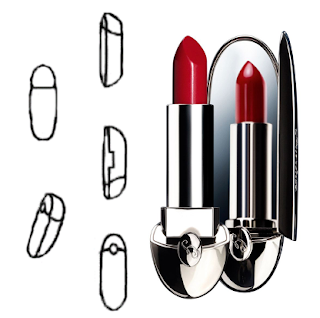
  Can the shape of a lipstick case function as an indicator of commercial origin? The answer is yes when such case is the iconic and immediately recognizable (at least to lipstick lovers!) one of   Rouge G de Guerlain : Today, also the General Court did agree in its judgment in  T-488/20  Guerlain   [currently only available in French] . The judgment (correctly) reverses the earlier, contrary decision of the EUIPO First Board of Appeal ( 2292/2019-1 ). Background In 2018, Guerlain applied to register the 3D sign represented above (left-hand side) for “lipsticks” in Class 3. The EUIPO examiner rejected the application considering that the sign would lack distinctive character, in accordance with Article 7(1)(b)  EUTMR . The subsidiary claim of the applicant under Article 7(3) EUTMR (acquired distinctiveness) could be examined once the decision became final. Guerlain unsuccessfully appealed.  The EUIPO Board considered that the shape applied for wou...

CJEU rules on platform liability under copyright law, safe harbours, and injunctions

Image
  Do platforms like YouTube and cyberlocker Uploaded directly perform copyright-restricted acts under Article 3 of the   InfoSoc Directive ? At what conditions is the hosting safe harbour under Article 14(1) of the   Ecommerce Directive   available? What may be the requirements for injunctions under Article 8(3) of the InfoSoc Directive? These are some of the questions that the German Federal Court of Justice had referred to the Court of Justice of the European Union (CJEU) in two separate cases, which were subsequently joined:  YouTube , C-682/18 and  Cyando , C-683/18. The  Opinion  of the Advocate General (AG) Øe was issued a little less than a year ago  [Katpost  here ] . This morning, the Grand Chamber of the CJEU delivered  its much-awaited ruling . Here are a couple of immediate impressions: First, unlike the AG, the CJEU was cautious not to venture into any analysis of the regime under Article 17 of the  DSM Directive ...

CJEU rules on seeding, trolls, and interplay between copyright enforcement and data protection rules

Image
  Back in 2019, The IPKat   reported   on a referral from Belgium –   Mircom , C-597/19 – asking the Court of Justice of the European Union (CJEU) to clarify the treatment of (i)   seeding   under the   InfoSoc Directive   and (ii) ‘trolls’ under the   Enforcement Directive , as well as the interplay between copyright enforcement and data protection law ( GDPR ). Earlier this week, the Court issued its  ruling , substantially endorsing the earlier  Opinion   of Advocate General (AG) Szpunar. Background Also Bluebell received a worrying request for damages in connection with some suspicious online activities ... Mircom is a Cypriot company holding rights (as an assignee) to several pornographic films. It is seeking an order from the Antwerp Companies Court against Belgian ISP Telenet that would allow it to identify the latter’s customers whose internet connections have been used to share illegal copies of Mircom’s films thr...

Commission unveils Article 17 Guidance: 3 highlights

Image
  Today, after several months of waiting and with the deadline for the national transposition of the   DSM Directive  being just a weekend away (it will be on Monday, 7 June), the European Commission has issued its   Guidance on the application of Article 17 .  Here are 3 key highlights: Article 17 not a  sui generis  right of communication to the public An actual  sui generis  Kat First, the Guidance takes a different view from the  one  provisionally expressed in September 2020. It states that Article 17 is  lex specialis  to the  InfoSoc Directive , but also that the provision does not create a special/ sui generis  right of communication to the public compared to the one already contained in Article 3 of the latter: Article 17 does not affect the concept of communication to the public or of making content available to the public elsewhere under Union law, nor does it affect the possible application of Article...